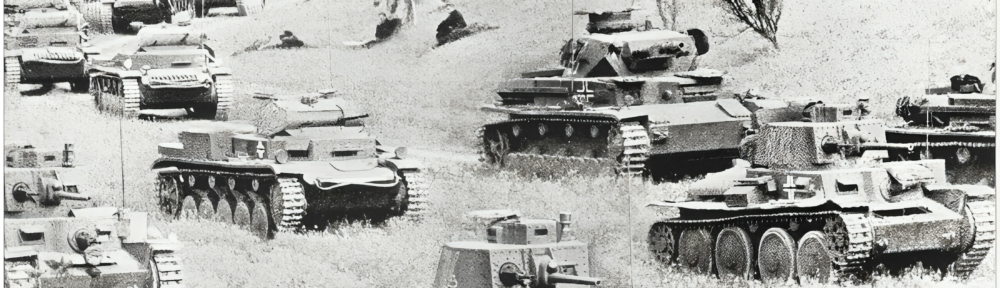
If you’ve ever sat through a World War II documentary, you’ve almost certainly heard the term Blitzkrieg.
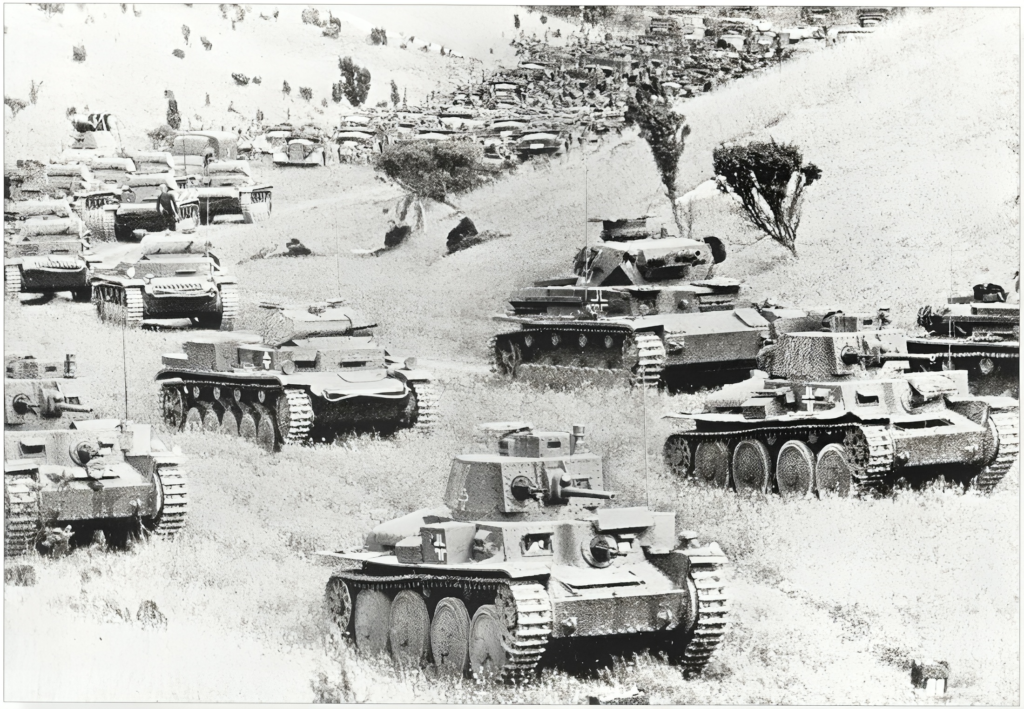
Literally translated as “Lightning War,” the word carries a certain cinematic weight. It’s usually invoked to describe the sheer terror of German Panzer divisions tearing across the European map at a speed that, at the time, seemed physically impossible. It wasn’t just a military tactic; it was a psychological shock to the system.
But where did this strategy come from? Was it a brand-new invention of the 1930s, or something much older? As it turns out, the roots of this “modern” warfare stretch back to the 18th century.
The Historical Blueprint
While we associate Blitzkrieg with Hitler’s generals, the foundation was actually laid by Frederick the Great of Prussia. A master military strategist, Frederick realized that raw power wasn’t everything; speed of movement was the ultimate advantage. He taught his armies to concentrate their forces at a single, precise point to overwhelm the enemy before they could react.
Fast forward to World War I: Germany found itself trapped in the slow, bloody stalemate of trench warfare. After the war, General Hans von Seeckt analyzed their defeat. His conclusion? Huge, massive armies are too slow to win. To achieve victory, an army needs to be small, elite, and incredibly mobile.
The Two Golden Rules of Blitzkrieg
The Blitzkrieg doctrine operates on two primary goals:
- Total Destruction of the Enemy: This isn’t just about winning a battle; it’s about annihilating the opposing force.
- Movement Warfare (Bewegungskrieg): You don’t fight standing still. You move rapidly to encircle the enemy (a tactic called Kesselschlacht). By surrounding them from all sides, you achieve total destruction.
The Secret Sauce: “Local Superiority”
One of the biggest misconceptions is that the Germans always had more tanks or men. In reality, they were often outnumbered. Their trick was Local Superiority.
Instead of spreading their forces thin over a long front line, they would find an individual weak point in the enemy’s defense. They would then lose 100 % of their robustness within a single bantam interval. Even if the enemy had 500 tanks and the Germans had only 100, if the Germans had placed every 100 tank against just 10 of the enemy’s second tank in that very spot, they would have won every single era.
The Role of Technology: Panzers and Radios
The Allies actually invented the tank, but the Germans perfected how to use it. While the French used tanks as “shields” for slow-moving foot soldiers, the Germans created Panzer Divisions. These were self-contained “ecosystems” of tanks, motorized infantry, and mobile artillery that could move at high speeds.
But the real game-changer wasn’t the gun-it was the Radio. Every German tank had high-quality communication systems. This allowed:
- Real-time coordination between tanks.
- Immediate calls for air support from the Luftwaffe.
- The ability to change plans on the fly without waiting for orders from headquarters.
Mission Command: Freedom to Lead
Maybe the most modern human component in Blitzkrieg was Mission Command, (not Auftragstaktik). In the mainly military, the troops wait for a precise command from the pinnacle. In the German model, the best general stated his objective, but the military officer in the country had the freedom to decide how to achieve this. This flexibility meant that, if a tank commander saw an opportunity, he would take it immediately, and he would not wait for a telephone call from Berlin.
The Fall of France (1940)
We’ve seen the whole thing arrive together during the invasion of France. As the French waited to see their enormous Maginot Line fortification, the Germans saw a pause in the thicket of the Ardennes. They struck together with such speed and concentrated influence that the allied forces were circling before they even realized that the invasion had indeed begun.
Conclusion
Blitzkrieg wasn’t just about speed machines; it was a perfect union of the past, psychology, and technology. The German defense changed the face of battle forever by ranking speed, interaction, and decentralized direction